

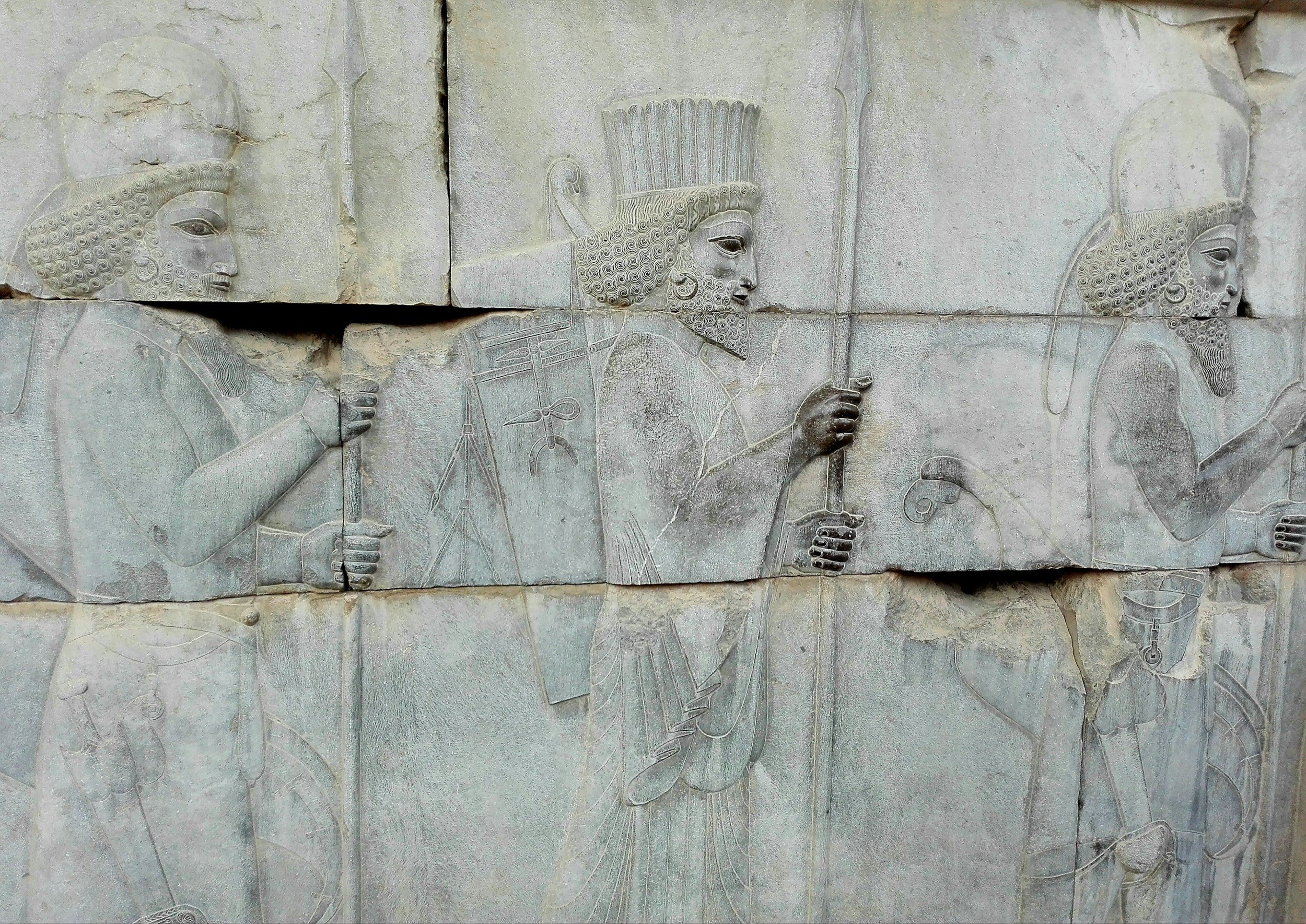
At The Classical Institute, this programme offers a sustained study of Herodotus and the ancient world, examining the origins of historical enquiry, the cultures and customs of ancient peoples, the rise of the Persian Empire and the Persian Wars. Led by John Claughton, an Oxford-educated classicist, published scholar of Herodotus and former teacher at Eton College, where he taught for 17 years, the programme brings together historical method, literary analysis and close engagement with Herodotus’ Histories across twelve lectures, enabling students to examine the relationship between historical narrative, cultural diversity and the political conflicts of the ancient world.
Herodotus and the Ancient World: History, Culture and the Persian Wars
‘A Traveller in an Antique Land’
A 12-Lecture Online Programme, taught every four weeks by John Claughton.
Programme Overview
In the first line of his writings, Herodotus uses the Greek word ‘historiē’ and, at that moment, invents what we mean by history. His history tells the tale of the wars in the 5th century BCE between the Persians and the Greeks – the battles of Marathon, Thermopylae, Salamis and Plataea – but it is much, much more than this.
Indeed, the battle of Marathon only arrives two-thirds of the way through his narrative and it is preceded by extensive accounts of the culture and customs of many people, from Egypt to India, from Scythia to ‘The Tin Islands’. So, Herodotus could claim to be not only the ‘Father of History’ but also the father of ethnography, sociology, even the genre of travellers’ tales.
Led by John A. Claughton, an Oxford-educated classicist and published scholar of Herodotus who taught at Eton College for 17 years, the programme comprises twelve seminars examining this extraordinary work in its historical, literary and cultural contexts.
These seminars will require no previous knowledge of Greek and will be conducted through translation. Each seminar will focus on specific passages of the text and students will be given the opportunity to read the passages before each session.
Programme Aims
The sessions will explore:
The context of Herodotus’ work and its relationship to the culture and literature of his time.
Herodotus’ method as a narrator and a historian.
Herodotus’ sources and reliability.
The key themes and issues of Herodotus’ work: human diversity, democracy and autocracy, the role of the gods in human events, the nature of causality.
The relation of Herodotus’ work to other historians.
The parallels between the events which Herodotus narrates and other periods in history.
The programme follows a structured sequence of twelve lectures, delivered every four weeks. Each lecture builds upon the preceding discussions, allowing students to develop a progressively deeper understanding of Herodotus’ historical method, his treatment of different peoples and cultures, and his account of the Persian Empire and its conflicts with the Greek world.
Engaging with the Programme
The programme welcomes applicants with an interest in ancient Greek history, classical literature, historical enquiry and the wider intellectual traditions of the ancient world.
No previous knowledge of Greek is required. All texts will be studied in translation, with selected passages made available for reading ahead of each seminar.
Recordings and Participation
The Classical Institute does not provide recordings of its taught programmes. Our teaching is designed for live participation, and students are expected to attend classes as they take place.
This reflects the Institute’s commitment to a Socratic approach to learning, in which teaching develops through close engagement with the material, questioning, discussion and intellectual exchange between lecturer and students. In language study in particular, active participation through reading, translation, oral practice and discussion is an integral part of the learning process.
Regular live attendance and participation are therefore expected of all students and form an important part of academic progress. Materials made available through Teleia are provided to support preparation, study and continued engagement between classes; they are not a substitute for attendance.
Programme Fees
The programme fee is £175.00 for the complete 12-lecture programme, delivered every four weeks. The programme follows a defined course of study, concluding upon completion of the twelve lectures.
Scholarships
Applicants are first considered for admission to the programme. Following a successful application, those wishing to apply for a scholarship are invited to complete a separate scholarship assessment form. Applicants should indicate in the Additional Information Section of the programme application if they wish to be considered for financial support.
The scholarship assessment process comprises a review of the application, followed by an interview. Awards are made on an individual basis, taking into account an applicant’s commitment to learning, academic merit and potential, together with demonstrated financial need.
Please allow up to 14 working days for the scholarship assessment process to be completed. Scholarships are subject to availability and eligibility.
Enrolment and Application
Applications are submitted through Teleia, The Classical Institute’s proprietary Virtual Learning Platform, developed specifically to support the Institute’s educational environment and programme delivery. Applicants will normally receive an admissions update within 14 days of submission.
New to the Application Process?
Please see our How to Apply: A Step-by-Step Guide for full guidance on submitting an application.
Already on Teleia?
Apply directly to this programme. (Coming Soon)
Programme Information
Lecturer: John Claughton
Department: Philosophy & Theology
Format: 12-seminar programme
Delivery: Online via Zoom
Day: Sundays
Time: 6.30pm-7.15pm (UK time)
Start Date: 2 November 2026