

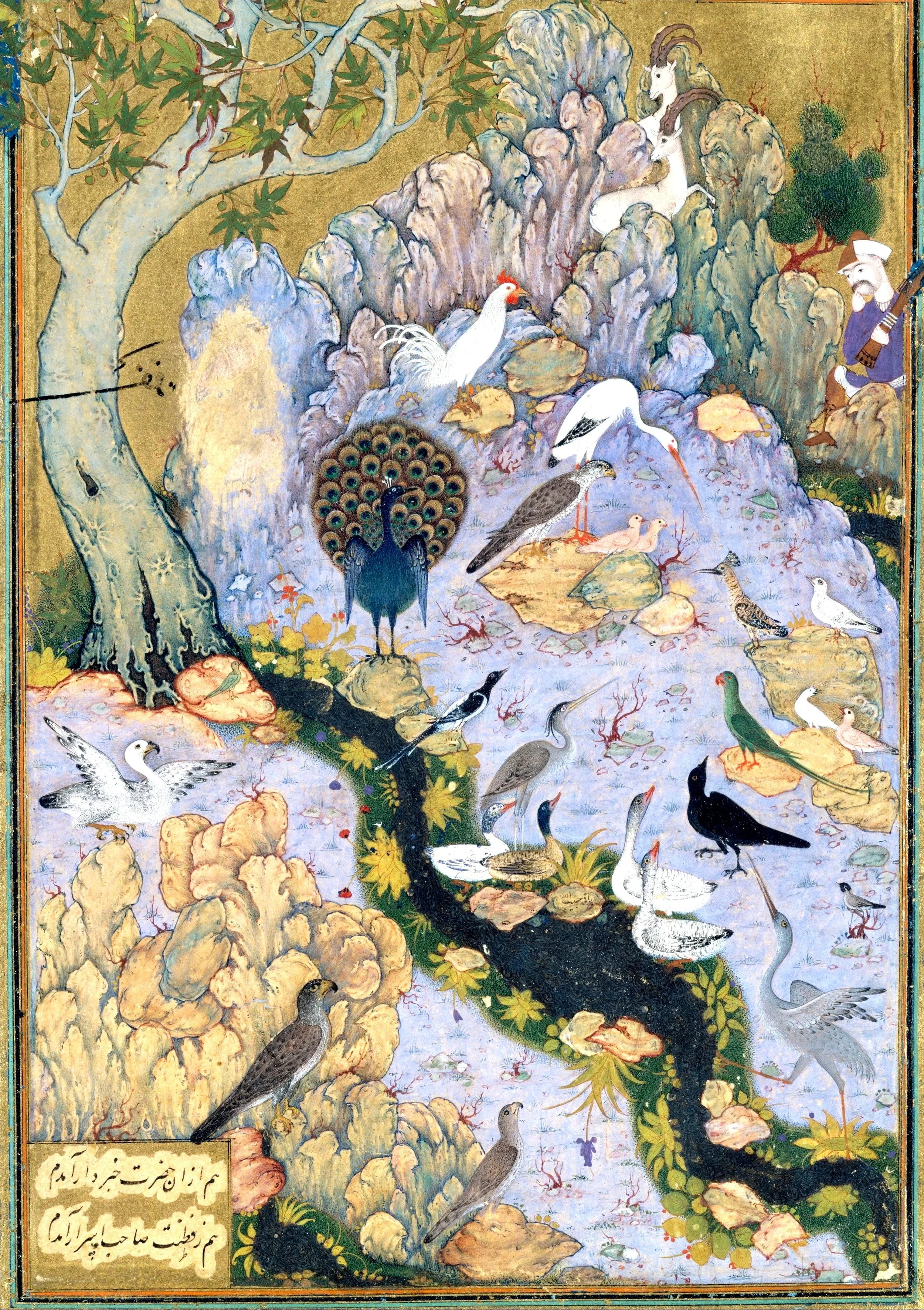
At The Classical Institute, this programme offers a systematic introduction to Classical Persian, establishing a strong grammatical foundation through sustained engagement with the prose and poetry of the Persian classical tradition. Led by Dr Hajnalka Kovacs, grammar, reading, translation, close analysis, oral language practice and active application are brought together within a cumulative course of study, enabling students to encounter Persian from the outset as a language of intellectual and literary expression.
Classical Persian: Grammar, Reading and the Language of the Persian Classical Tradition
A 10-Week Rolling Online Programme taught weekly by Dr Hajnalka Kovacs
Programme Overview
This programme offers a systematic introduction to Classical Persian for beginners. The programme’s primary aim is to establish a grammatical foundation in the language through sustained engagement with Classical Persian prose and poetry. It follows The Classical Institute's liberal arts approach to language learning, in which grammar, reading, translation, close analysis, oral language practice and active application form a single, cumulative course of study. From the earliest appropriate point, students encounter Persian not simply as a system of forms to be mastered, but as a language of intellectual and literary expression.
The grammatical progression of the programme will be shaped by the lecturer, drawing selectively upon established Persian grammars and teaching materials. Grammar will be presented in a clear and consolidated form, supported by focused exercises and supplemented throughout by relevant Classical Persian forms and usages. From the earliest stages, this grammatical study will be brought into contact with authentic examples from Classical Persian prose and poetry, with prepared readings developing progressively in length and complexity as students’ competence grows.
Building on prior familiarity with the Perso-Arabic script, the programme will establish the principal grammatical, orthographic and pronunciation conventions required for reading Classical Persian. The earliest stages will combine focused grammatical study with short authentic examples from prose and poetry. As grammatical and lexical competence develops, students will move progressively towards longer and more complex excerpts, while earlier structures continue to recur through reading and review. This cumulative foundation is intended to enable students to engage with substantial Classical Persian material considerably earlier than is customary in conventional modern Persian programmes.
The programme will place particular emphasis on four closely related practices: grammatical understanding, close reading, translation and active application. Grammatical teaching will give students a clear account of the forms and structures required to understand the language. Associated close reading will train them to analyse how words, clauses and sentences relate to one another within a passage. Translation will test both grammatical understanding and interpretative judgement. And active application will reinforce familiar structures through exercises such as sentence transformation, substitution, oral questioning and reading aloud. Together, these practices are intended to ensure that students go beyond the recognition of grammatical forms toward developing an increasingly secure and usable command of Classical Persian.
Where the material permits, linguistic study also opens naturally into consideration of intellectual, ethical, literary and cultural significance. This is not treated as a separate layer added to language work; rather, close attention to grammar, vocabulary and expression provides the basis for considering how ideas are articulated and how form contributes to meaning. In this way, the programme retains both philological discipline and the wider intellectual orientation of a liberal arts education.
Programme Aims
As students progress through the programme, they will:
Develop secure command of Persian orthography and pronunciation, progressing towards fluent reading of sustained Classical Persian texts.
Develop a systematic and cumulative command of Persian grammar and syntax, from foundational structures to increasingly complex classical usage.
Analyse grammatical and syntactical relationships with precision, attending to how structure, word order and form shape meaning.
Progress from short authentic samples and supported excerpts to sustained and increasingly independent engagement with Classical Persian prose and poetry across a range of registers and levels of complexity.
Develop translation skills with increasing grammatical accuracy, sensitivity to context, idiom and register, and sound interpretative judgement.
Consolidate and apply grammatical knowledge through reconstruction, substitution, transformation, oral questioning and other forms of active language work.
Build a substantial vocabulary in context and develop an increasingly refined understanding of Classical Persian usage, literary expression and textual form.
Develop the linguistic competence, analytical habits and use of appropriate reference tools required for advanced and independent engagement with Classical Persian texts.
The rolling structure of the programme allows these aims to be pursued cumulatively, with progression determined by increasing linguistic competence and textual independence rather than by a fixed period of study.
Engaging with the Programme
The programme is open to anyone with an interest in Classical Persian and its literary and intellectual tradition, whether approaching the language for the first time or seeking a more systematic course of study.
It will also be of particular relevance to students of Persian language and literature, Persianate studies, Islamic studies, history and related fields, as well as independent and returning learners wishing to engage with Persian prose and poetry in the original.
No previous knowledge of Persian is required, although students should be familiar with the Perso-Arabic alphabet before beginning the programme.
Recordings and Participation
The Classical Institute does not provide recordings of its taught programmes. Our teaching is designed for live participation, and students are expected to attend classes as they take place.
This reflects the Institute’s commitment to a Socratic approach to learning, in which teaching develops through close engagement with the material, questioning, discussion and intellectual exchange between lecturer and students. In language study in particular, active participation through reading, translation, oral practice and discussion is an integral part of the learning process.
Regular live attendance and participation are therefore expected of all students and form an important part of academic progress. Materials made available through Teleia are provided to support preparation, study and continued engagement between classes; they are not a substitute for attendance.
Programme Fees
The fee is £165.00 for each 10-week period of study. The programme operates on a rolling basis and does not have a fixed end date, reflecting the cumulative nature of language learning and allowing students to continue their studies through successive periods as their linguistic competence develops.
Scholarships
Applicants are first considered for admission to the programme. Following a successful application, those wishing to apply for a scholarship are invited to complete a separate scholarship assessment form. Applicants should indicate in the Additional Information Section of the programme application if they wish to be considered for financial support.
The scholarship assessment process comprises a review of the application, followed by an interview. Awards are made on an individual basis, taking into account an applicant’s commitment to learning, academic merit and potential, together with demonstrated financial need.
Please allow up to 14 working days for the scholarship assessment process to be completed. Scholarships are subject to availability and eligibility.
Enrolment and Application
Applications are submitted through Teleia, The Classical Institute’s proprietary Virtual Learning Platform, developed specifically to support the Institute’s educational environment and programme delivery. Applicants will normally receive an admissions update within 14 days of submission.
New to the Application Process?
Please see our How to Apply: A Step-by-Step Guidefor full guidance on submitting an application.
Already on Teleia?
Apply directly to this programme.
Programme Information
Lecturer: Dr Hajnalka Kovacs
Department: Language & Literatures
Format: 10-Week Rolling Online Programme
Delivery: Online via Zoom
Day: Wednesdays, weekly
Time: 7:30pm-9:00pm (UK time)
Start Date: 30 September 2026