

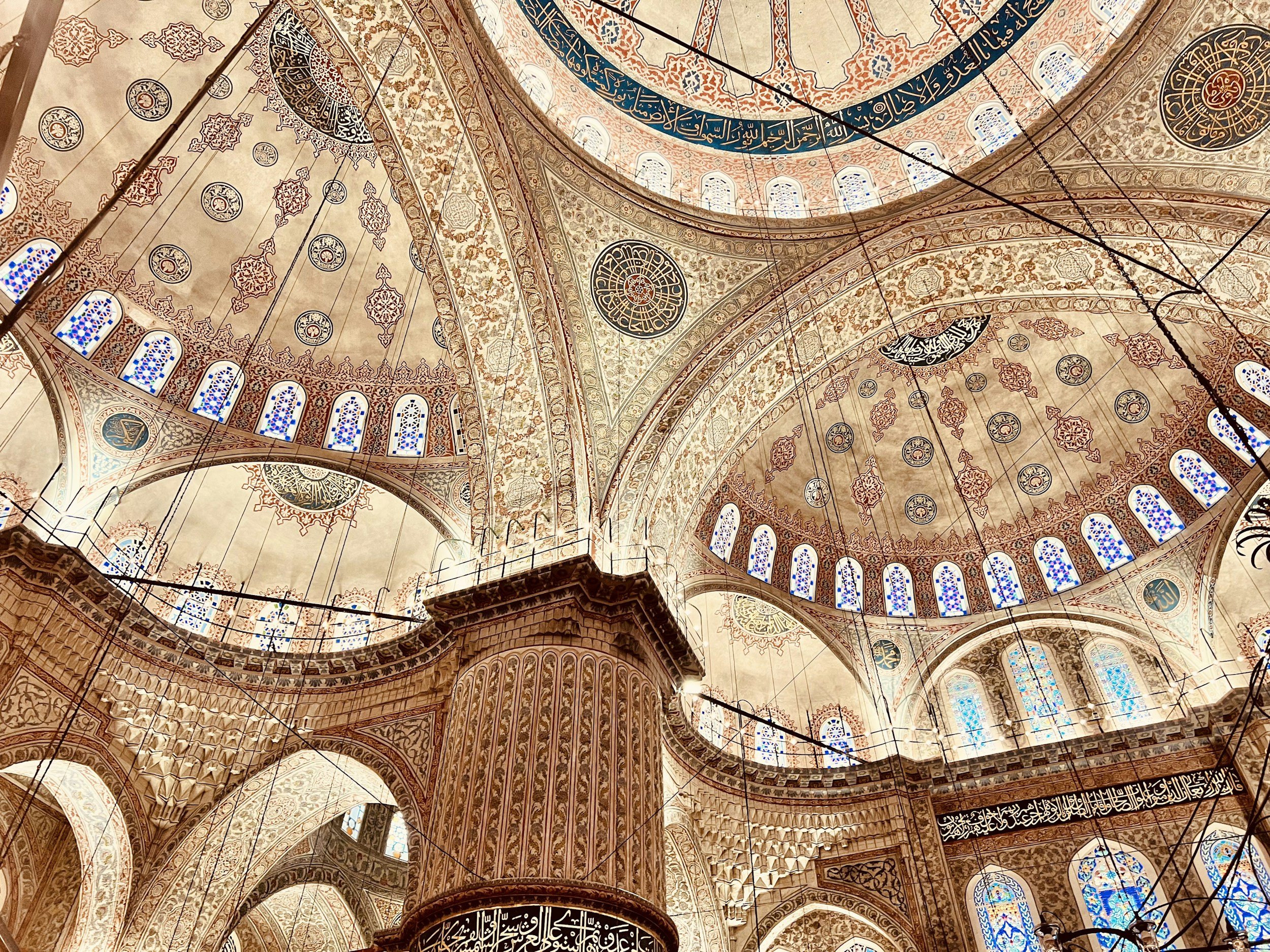
At The Classical Institute, this programme offers an advanced study of Classical Arabic literature through close engagement with major works of poetry and prose from the pre-Islamic and early Islamic periods. Led by Dr Badreldeen Ismail, students undertake detailed linguistic, syntactical and rhetorical analysis of primary texts alongside classical linguistic sources, examining questions of literary expression, language and meaning, and the relationship between Arabic poetry and the principle of i'jaz al-Qur'an.
Classical Arabic Literature
A 10-Week Rolling Online Programme taught weekly by Dr Badreldeen Ismail
Programme Overview
This programme offers a comprehensive study of Classical Arabic literature from the pre-Islamic period to the 3rd/9th century. Through a rigorous analytical approach, students engage with major works of poetry and prose that have shaped the Arabic literary tradition.
The programme places particular emphasis on close reading of primary texts, with sustained attention to their linguistic, syntactical and rhetorical features. This textual study is supported by engagement with authoritative works from the classical Arabic linguistic tradition, including Sibawayh, Ibn Faris, Ibn Jinni, Ibn al-Anbari, Ibn al-Hajib, Ibn Malik, Abu Hayyan and Ibn Hisham.
A distinctive aspect of the programme is its examination of Classical Arabic poetry in relation to the doctrinal principle of i'jaz al-Qur'an (the inimitability of the Qur'an). Through the study of pre-Islamic and early Islamic poetic forms, students analyse the linguistic, rhetorical and stylistic conventions that shaped early Arabic literary expression and consider their significance for understanding the distinctive eloquence and rhetorical character of the Qur'an.
The programme also introduces questions within the philosophy of language, including the relationship between language and meaning, the nature of linguistic signs, and the interaction between syntax and semantics. Students additionally encounter the comparatively under-explored science of Asrar al-Arabiyya (Secrets of the Arabic Language), examining some of the subtleties and organising principles of the Arabic linguistic system.
Teaching is conducted through a Socratic dialogical method, combining close reading, guided questioning, discussion and student presentations. Students are expected not simply to comprehend the texts under study, but to articulate and defend increasingly sophisticated analyses of questions in syntax, morphology, rhetoric and literary expression.
The previous course of study centred upon an in-depth reading of Banat Su'ad by Ka'b ibn Zuhayr. The programme now turns to Lamiyyat al-Arab by al-Shanfara, a pivotal work within the su'luk poetic tradition, characterised by themes of exile, autonomy and defiance and providing a rich context for examining pre-Islamic Arabic literary and cultural values.
Programme Aims
As students progress through the programme, they will:
Develop a comprehensive and nuanced understanding of major works from the pre-Islamic and early Islamic Arabic literary traditions.
Develop the ability to undertake detailed philological, syntactical, morphological and rhetorical analysis of Classical Arabic texts.
Strengthen their proficiency in Classical Arabic through sustained engagement with sophisticated primary texts and classical linguistic sources.
Examine Classical Arabic poetry as an important context for the study of i'jaz al-Qur'an and questions concerning language, rhetoric and meaning.
Develop an understanding of the social, cultural and historical contexts within which Classical Arabic literary works emerged.
Develop the confidence to formulate, present and discuss advanced linguistic and literary analysis within a scholarly environment.
Engaging with the Programme
The programme is intended for students who already possess a secure foundation in Classical Arabic and wish to engage more closely with the language through sustained study of its literary and linguistic traditions.
Students should have an established knowledge of Arabic syntax and morphology, together with some familiarity with rhetoric and the reading of Classical Arabic texts. Prior engagement with classical grammatical and linguistic works is advantageous but is not required in every case.
The programme will be particularly relevant to students and researchers working in Arabic language and literature, Islamic studies, Qur'anic studies, theology, intellectual history and related fields, as well as independent and returning learners with the necessary linguistic foundation.
Given the text-centred and dialogical character of the programme, students are expected to prepare assigned material, participate in close reading and discussion, and engage seriously with the linguistic and interpretative questions that arise from the texts.
Recordings and Participation
The Classical Institute does not provide recordings of its taught programmes. Our teaching is designed for live participation, and students are expected to attend classes as they take place.
This reflects the Institute’s commitment to a Socratic approach to learning, in which teaching develops through close engagement with the material, questioning, discussion and intellectual exchange between lecturer and students. Active participation is an integral part of the learning process and allows students to engage directly with both the subject matter and the wider intellectual life of the classroom.
Regular live attendance and participation are therefore expected of all students and form an important part of academic progress. Materials made available through Teleia are provided to support preparation, study and continued engagement between classes; they are not a substitute for attendance.
Programme Fees
The fee is £205.00 for each 10-week period of study. The programme operates on a rolling basis and does not have a fixed end date, reflecting the cumulative nature of language learning and allowing students to continue their studies through successive periods as their linguistic competence develops.
Scholarships
Applicants are first considered for admission to the programme. Following a successful application, those wishing to apply for a scholarship are invited to complete a separate scholarship assessment form. Applicants should indicate in the Additional Information Section of the programme application if they wish to be considered for financial support.
New to the Application Process?
Please see our How to Apply: A Step-by-Step Guide for full guidance on submitting an application.
Programme Information
Lecturer: Dr Badreldeen Ismail
Department: Languages and Literature
Level: Advanced
Format: 10-Week Rolling Programme
Delivery: Online via Zoom
Schedule: Weekly on Thursdays
Time: 8:00pm-9:30pm (UK time)
Current Text: Lamiyyat al-Arab by al-Shanfara
Enrolment: Closed