

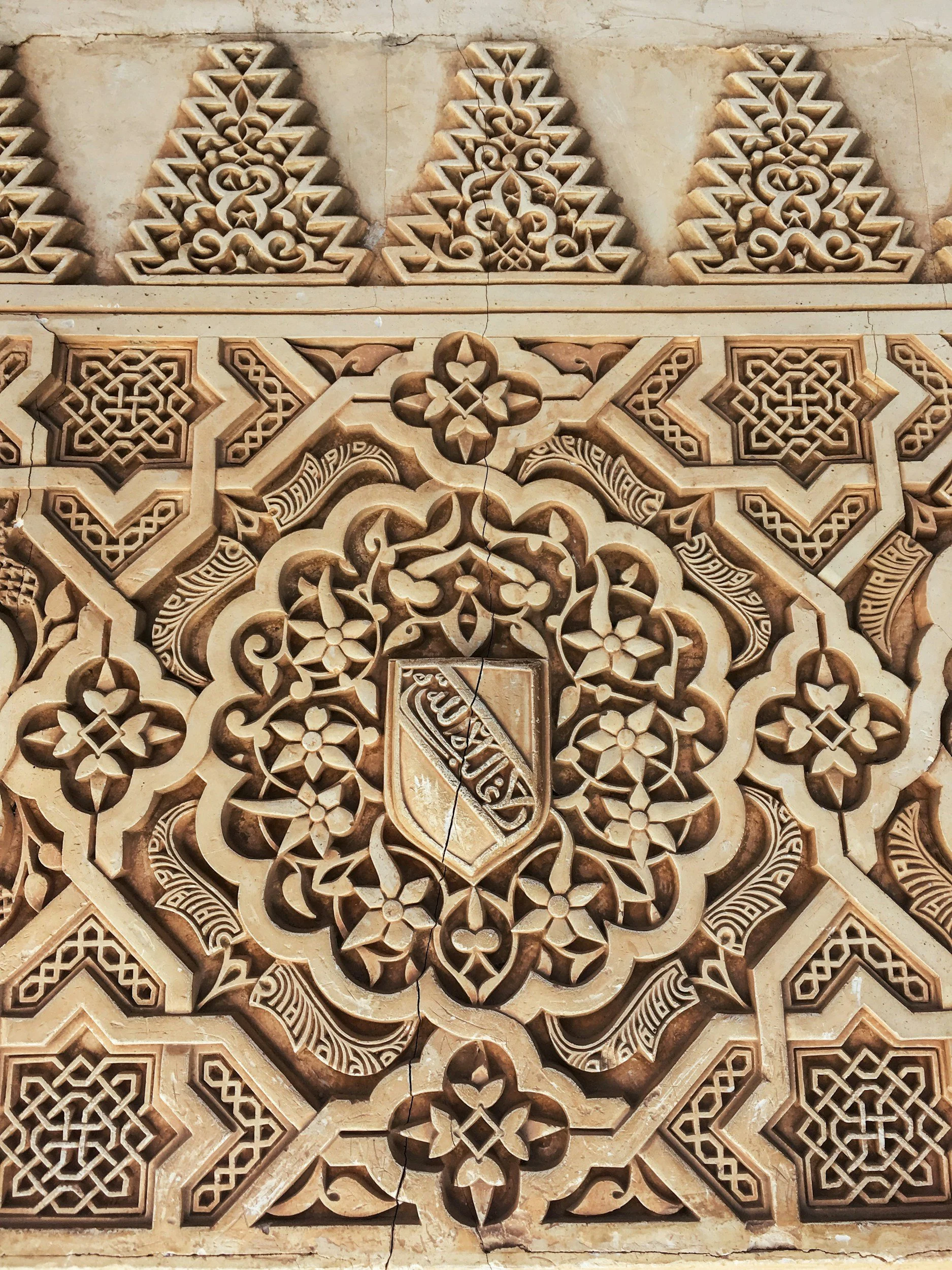
At The Classical Institute, this programme introduces the thought of Ibn ʿArabi through close study of his celebrated Tarjuman al-Ashwaq and its accompanying commentary. Led by Senior Lecturer Dr Ali Hussain, participants examine the poetic, metaphysical, and hermeneutical dimensions of the text while exploring the central principles of Akbarian metaphysics. Through guided textual study and engagement with Ibn ʿArabi’s wider corpus, the programme situates the Tarjuman within the broader Islamic intellectual tradition, offering insight into one of the most influential and enduring schools of Sufi thought.
The Interpreter of Ardent Desires: Ibn ʿArabi's Tarjuman al-Ashwaq and the Foundations of Akbarian Metaphysics
Programme Overview
This programme offers a comprehensive introduction to the life, thought, and writings of Muhyi al-Din Ibn ʿArabi (d. 638/1240), widely regarded as one of the most profound and influential thinkers in the Islamic intellectual tradition. Taken as its central text Ibn ʿArabi’s celebrated poetic compendium Tarjuman al-Ashwaq (The Interpreter of Ardent Desires), read alongside his own commentary Dhakhaʾir al-Aʿlaq fi Sharh Tarjuman al-Ashwaq (The Treasures of Attachments in Commentary on the Interpreter of Ardent Desires), the programme uses the Tarjuman as a lens through which to encounter the breadth of Ibn ʿArabi’s metaphysical system, encompassing its ontology, epistemology, cosmology, and spiritual psychology, and drawing extensively upon his other major works in the process.
Comprising sixty-one poems composed in Mecca, the Tarjuman is written in the language of love poetry, longing, beauty, and symbolic encounter. Yet beneath its lyrical surface, the work encodes a vast metaphysical vision of the deep and indissoluble relationship between eros, imagination, spiritual unveiling (kashf), and divine self-disclosure (tajalli). The Dhakhaʾir, composed shortly afterwards at the request of Ibn ʿArabi's close disciples in Aleppo, provides the author's own key to the esoteric significance of each verse, drawing the reader from the outward form of the qasida into the inner landscape of contemplative realisation. The Tarjuman thus serves as a doorway into the entirety of Ibn ʿArabi's contemplative and intellectual universe, and it is in this spirit that the programme approaches it.
To read the Tarjuman with the depth it demands is necessarily to engage with the full scope of Ibn ʿArabi's thought. The programme will accordingly make extensive and sustained reference to his two major works, al-Futuhat al-Makkiyya (The Meccan Openings) and Fusus al-Hikam (The Ringstones of Wisdom) as integral parts of the intellectual architecture through which the poems come alive.
The programme will begin with a biography of Ibn ʿArabi, covering his early life in al-Andalus, his formative years in Seville under the guidance of spiritual masters, his celebrated encounter as a youth with the philosopher Ibn Rushd, his journeys through North Africa and the central lands of Islam, his visionary experiences, his pilgrimage to Mecca, and more. Students will then be introduced to the key foundations of his thought, encompassing his ontology, and the relationship between the Divine Essence, Names, and Acts; his epistemology, centred on the distinction between rational, transmitted, and unveiling-based knowledge (kashf); his understanding of the imagination (khayal) as an ontological and epistemological reality bridging the sensible and the intelligible; his humanology, especially the concept of the Perfect Human (al-insan al-kamil); his cosmology; and his etymological understanding of sacred language, symbolism, and the hermeneutics of poetic expression.
The main body of the programme will then proceed through the Tarjuman in detail, verse by verse, reading each poem alongside Ibn ʿArabi's own commentary in Dhakhaʾir al-Aʿlaq. At each stage, the poems will serve as occasions to explore the broader dimensions of Akbarian thought to which they give voice, drawing upon the Futuhat, the Fusus, and other works as the themes demand. By the programme's conclusion, students will have gained both a deep familiarity with the Tarjuman and the Dhakhaʾir and a substantial and integrated understanding of Ibn ʿArabi as a thinker.
Learning Outcomes
Throughout this programme, students will
Develop a substantial understanding of Ibn ʿArabi’s intellectual and metaphysical system, encompassing his ontology, epistemology, cosmology, humanology, and understanding of sacred language.
Understand the major stages of Ibn ʿArabi’s life and spiritual formation; acquainting oneself with Ibn ʿArabi’s key works as well as important secondary references on his life and thought.
Read the Tarjuman as a foundation of the later Akbarian tradition, gaining a sense of how its central themes were received, systematised, and developed by the school of Ibn ʿArabi
Read the Tarjuman in light of the author's own commentary in Dhakhaʾir al-Aʿlaq, and engage with the hermeneutical principles that govern the transition from poetic image to metaphysical meaning.
Learn how Ibn ʿArabi uses the conventions of classical Arabic love poetry as a symbolic language for divine realities, and understand the relationship between the outward form of the qasida and its esoteric content.
Develop confidence engaging in Ibn ʿArabi’s writings with reverence, intellectual clarity, and depth.
Day & Time
Thursdays, 8.00-9.30pm (UK time) | Fortnightly
Delivery & Schedule
Taught Online | Commenced Thursday 6 August 2026.
Programme Fees
The fee is £165.00 for each 20-week term of study. Each term comprises ten teaching sessions, with one session held every two weeks. The programme is offered across a series of rolling 20-week terms.
The curriculum is intentionally structured for long-term study, with the text progressing at a measured and methodical pace to ensure that each line and concept is properly understood before moving on to the next. Students may continue their studies over successive terms according to their individual pace of learning and academic goals. Reflecting this approach, the programme does not have a fixed completion date.
Scholarships
Applicants are first considered for admission to the programme. Following a successful application, those wishing to apply for a scholarship are invited to complete a separate scholarship application form. The scholarship assessment process comprises a review of the application, followed by an interview. Awards are made on an individual basis, taking into account an applicant’s commitment to learning, academic merit and potential, together with demonstrated financial need. Please allow up to 14 working days for the scholarship assessment process to be completed. Scholarships are subject to availability and eligibility.
Enrolment and Application Process
Applications for this programme are submitted through Teleia, The Classical Institute’s proprietary Virtual Learning Platform, developed to support the Institute’s distinctive educational environment and programme delivery. Applicants should first download the Teleia application via either iOS or Android using the links below. Once registered, applicants should search for the programme title within Teleia and complete the application form accordingly. Applicants will normally receive an admissions update within 14 days of submission. Enrolment opens Monday 6 July 2026.
Lecturer
Dr Ali Hussain